Project Overview
// The Problem
Understanding processor internals such as instruction execution, control logic, and data paths is challenging when learning solely through theory or high-level simulations. Traditional FPGA labs often limit flexibility by relying on fixed programming approaches.
// The Solution
This project implements a fully functional 4-bit processor from scratch using VHDL, enabling low-level control over processor components. A key enhancement allows the board to be reprogrammed directly using machine language, extending beyond conventional programming techniques.
// The Impact
The Nano Processor provides a hands-on learning platform for computer engineering students to explore processor design, digital logic, and machine-level programming, significantly enhancing practical understanding of CPU architecture.
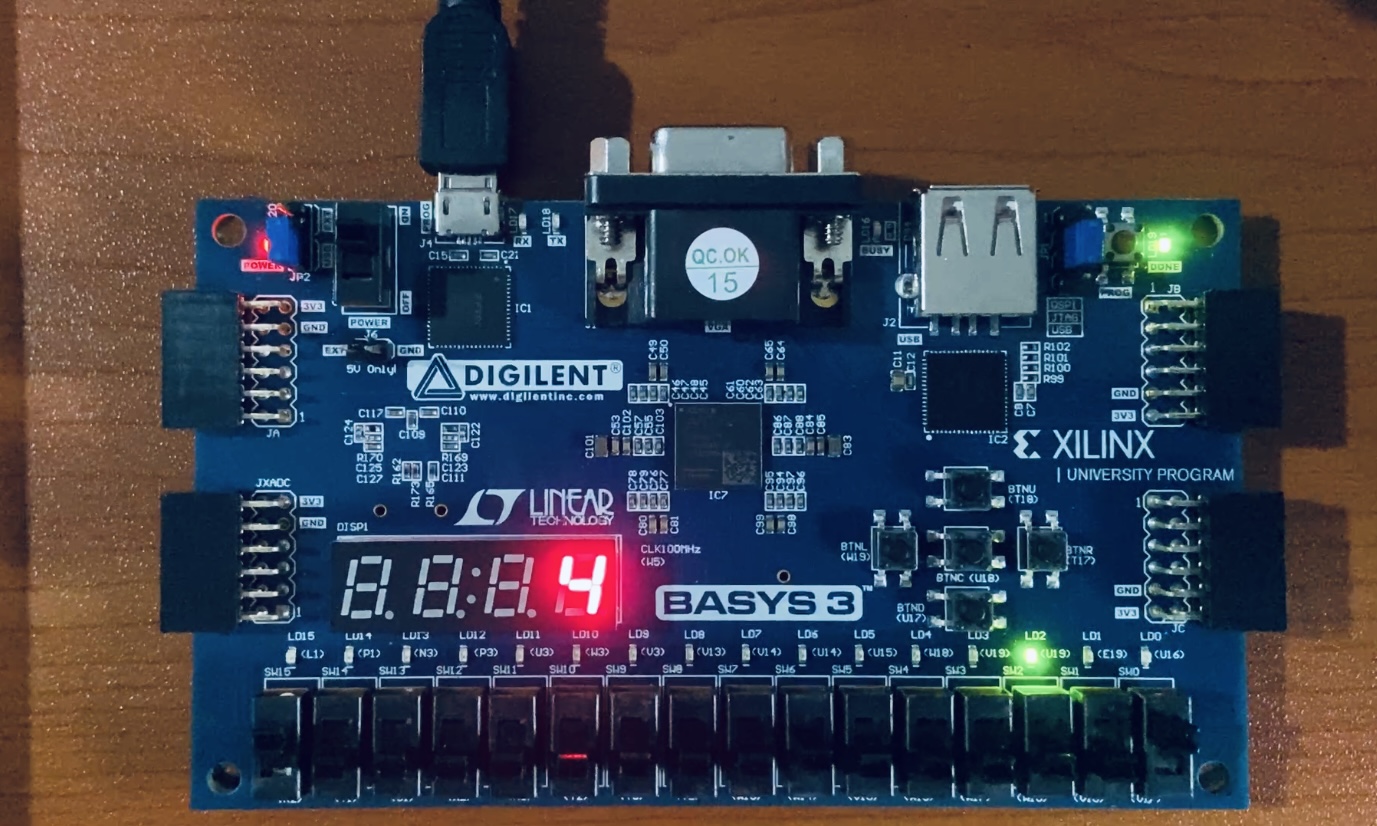
A simplified processor architecture implemented on FPGA, consisting of core CPU components interconnected through a custom data path and control unit.
Tech Stack
Key Features
- Custom-designed 4-bit processor architecture
- Instruction fetch, decode, and execute cycle implementation
- Machine language-based reprogramming support
- FPGA-based deployment and testing
- Modular and extensible VHDL design
